
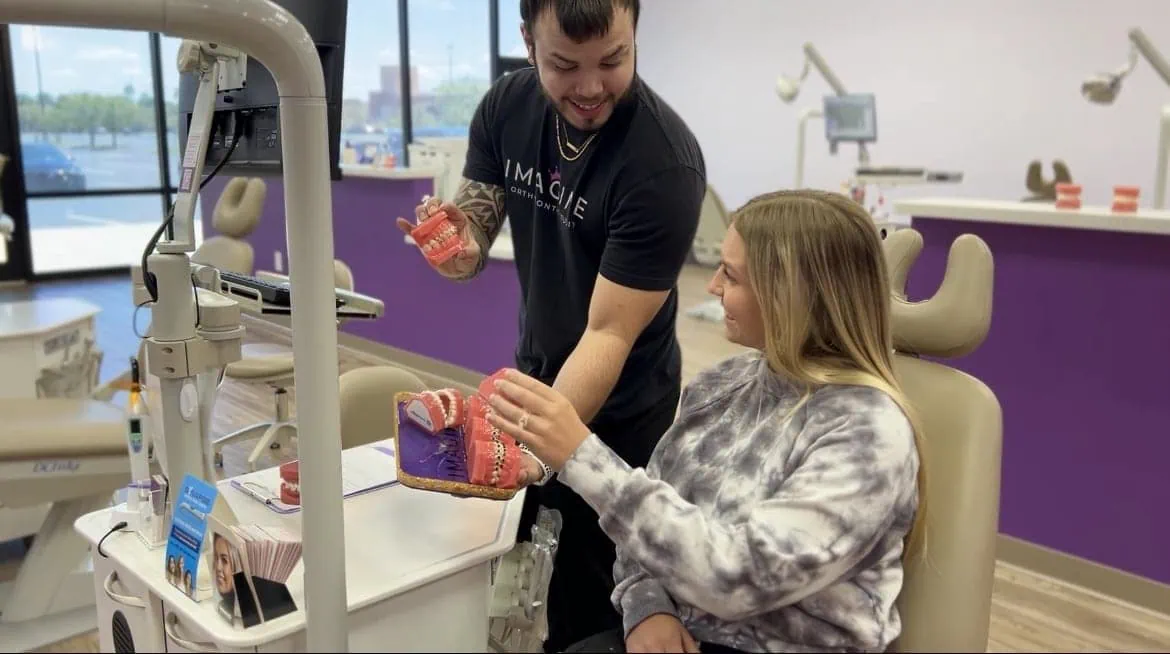
If your child’s orthodontist has mentioned a Herbst appliance, you might be wondering what this device actually does. Plenty of parents feel the same way. Hearing unfamiliar terms during an evaluation is common, and it makes sense to want a clear picture of what’s being recommended. The Board-Certified Orthodontists on the team at Imagine Orthodontic Studio, serving families across Central Florida, frequently recommend this appliance for specific bite problems. Let’s break down what it is and how it works.
What Is a Herbst Appliance?
A Herbst appliance is a fixed orthodontic device designed to correct Class II malocclusions, commonly known as overbites caused by a recessed lower jaw. Unlike braces that move teeth, the Herbst appliance works on the jaw itself. It encourages the lower jaw to grow forward while gently restraining upper jaw growth.
The device consists of medical-grade stainless steel crowns that fit over the back molars, connected by a telescoping tube-and-rod mechanism on each side of the mouth. Think of it like a small hinge system that holds the lower jaw in a more forward position around the clock. The metal components are durable enough to withstand daily chewing forces, and the entire system sits inside the mouth where it’s barely visible to others.
Because it’s cemented in place, your child doesn’t need to remember to wear it. That’s a big difference from removable appliances that depend on cooperation to work. Parents often appreciate this fixed design because it takes the daily compliance factor off the table entirely.
Some variations of the Herbst appliance use acrylic splints or bands instead of full crowns, depending on the child’s dental anatomy and what the orthodontist determines will work best. The core mechanics stay the same across all versions: a telescoping arm on each side that positions the lower jaw forward.
This appliance works best in growing children and adolescents, typically between ages 9 and 14. During this window, the jaw bones are still developing and respond well to guided growth modification.
The Herbst appliance has an interesting history worth noting. German orthodontist Emil Herbst invented it back in 1909, but it fell out of favor for decades. Orthodontists rediscovered its benefits in the 1980s, and it’s been a go-to correction for skeletal overbites ever since.
How Does the Herbst Appliance Work?
At the bone level, the Herbst appliance stimulates new growth at the condyle, which is the rounded end of the lower jawbone where it meets the skull. By holding the mandible forward constantly, the appliance triggers bone remodeling at the temporomandibular joint. New cartilage and bone form at the condyle over time, gradually making the forward jaw position permanent rather than forced.
Every time your child closes their mouth, the appliance guides the jaw into this corrected position. Over weeks and months, the lower jaw adapts and grows into better alignment with the upper jaw.
At Imagine Orthodontic Studio, Board-Certified Orthodontists monitor progress with regular check-ups and adjust the timeline based on how your child’s jaw responds. Most kids wear the Herbst appliance for about 12 months. Some cases wrap up in 9 months, while more involved situations might require up to 15 months. Every mouth is different.
What to expect during the adjustment period:
The first week or two can feel uncomfortable. Your child’s jaw muscles need time to adapt to the new position. Soreness is normal and usually manageable with over-the-counter relievers like ibuprofen or acetaminophen.
Eating takes some getting used to as well. Here are some tips that help during the transition:
- Cut food into small, bite-sized pieces
- Stick to softer foods for the first week
- Avoid sticky candies like caramel and taffy
- Skip hard foods like whole apples, raw carrots, and ice
- Take smaller bites and chew slowly
Speaking might feel slightly different at first too. Good news: most kids adapt within a few days and speak normally again. Reading aloud or talking more than usual can actually speed up this adjustment.
Benefits of the Herbst Appliance
The Herbst appliance offers several advantages over other overbite corrections. Imagine Orthodontic Studio recommends it when these benefits align with your child’s specific needs.
Key benefits include:
- 24/7 correction with zero compliance required
- Potential to avoid jaw surgery later in life
- Shorter overall time in orthodontic care
- Improved facial balance and profile, not just tooth alignment
- Greater comfort and lower visibility compared to headgear
Here’s a closer look at each one:
Works Around the Clock
Because it’s fixed in place, the appliance does its job 24 hours a day, 7 days a week. Your child doesn’t need to remember to put it in or wear it for a certain number of hours. No compliance issues means more predictable results.
May Help Avoid Jaw Surgery Later
For growing kids, the Herbst appliance can correct skeletal problems that would otherwise require surgical intervention later in life. Catching these issues early, while growth is still happening, keeps more options available. Once the jaw stops developing, those options narrow significantly.
What About Shorter Overall Orthodontic Care?
When combined with braces, the Herbst appliance often reduces how long your child needs orthodontic care. Correcting the jaw relationship first creates a better foundation for aligning the teeth afterward, which can shorten the overall timeline.
Improves Facial Profile, Not Just Teeth
This appliance addresses the underlying skeletal issue. The result is often a more balanced facial appearance, with the chin in better proportion to the rest of the face. It’s not just about straight teeth; it’s about the whole profile.
How Does It Compare to Headgear for Comfort?
Remember those metal headgear devices that wrapped around the back of the head? The Herbst appliance stays entirely inside the mouth. It’s less visible and doesn’t interfere with activities like sports or sleeping. Most kids prefer it for that reason alone.
Herbst Appliance vs. Headgear and Other Overbite Treatments
Not all overbite corrections work the same way. Understanding your options helps you have better conversations with your orthodontist.
| Correction | Type | Best For | Cooperation Needed | Visibility |
|---|---|---|---|---|
| Herbst Appliance | Fixed | Skeletal overbites in growing kids | None (cemented in) | Low (inside mouth) |
| Headgear | Removable | Skeletal overbites | High (12-14 hours daily) | High (external straps) |
| Twin Block | Removable | Skeletal overbites | High (20+ hours daily) | Moderate |
| MARA Appliance | Fixed | Skeletal overbites | None (cemented in) | Low (inside mouth) |
| Elastics with Braces | Removable | Dental overbites | Moderate | Low |
Headgear requires serious commitment.
Traditional headgear means wearing an external device for 12 to 14 hours every day. Many kids resist it, especially at school or around friends. Because the Herbst appliance is fixed in place, it removes the cooperation variable entirely, which orthodontists find leads to more predictable outcomes.
The Twin Block depends on compliance too.
This removable appliance also positions the lower jaw forward, but it must be worn 20+ hours daily. For kids who might forget or resist wearing it, the fixed Herbst appliance often proves more reliable.
Herbst vs. MARA: The MARA (Mandibular Anterior Repositioning Appliance) works similarly, using a different attachment system. Your orthodontist may prefer one over the other based on your child’s specific anatomy.
When elastics fall short. Rubber bands with braces can correct dental overbites, where the teeth themselves are positioned incorrectly. But when the jaw bones are misaligned, elastics alone won’t solve it.
When surgery becomes the only path. If someone has finished growing and has a significant skeletal discrepancy, jaw surgery (orthognathic surgery) may be necessary. This is exactly why early evaluation matters. According to the American Association of Orthodontists, children should have their first orthodontic evaluation by age 7. Board-Certified Orthodontists at Imagine Orthodontic Studio recommend that same timeline to keep all options open for Central Florida families.
How Much Does a Herbst Appliance Cost?
Herbst appliance costs vary widely by case and location. Your orthodontist can give you a specific estimate during your free consult. That said, here are general ranges families can expect:
- Herbst appliance alone: estimated $1,000 to $3,000
- Herbst appliance combined with braces: estimated $3,000 to $7,000
- With insurance: varies significantly by plan and coverage limits
Several factors influence where your child’s cost falls within those ranges:
- Length of care. Longer timelines mean more visits and adjustments.
- Case complexity. More severe skeletal discrepancies may require additional interventions.
- Geographic location. Costs vary by region and local market rates. Central Florida pricing may differ from other parts of the state.
- Orthodontist’s credentials. Board-Certified specialists may charge differently than general dentists offering orthodontic services.
Insurance coverage
Most dental insurance plans with orthodontic benefits apply toward Herbst appliance care. Since it’s a medically necessary device to correct jaw alignment, insurance companies typically cover it the same as braces. When calling your insurance provider, ask specifically about your orthodontic lifetime maximum, any age restrictions, and whether functional appliances are covered separately from braces or under the same benefit. Check your specific plan for coverage limits and waiting periods.
Payment options
Financial concerns shouldn’t prevent anyone from getting the care they need. Imagine Orthodontic Studio offers flexible payment options and 0% interest plans that make this type of correction more accessible for families. During your free consult, the team walks you through every available option so there are no surprises.
Who Needs a Herbst Appliance? Ideal Candidates
Not every child with an overbite needs a Herbst appliance. This device works best for specific situations, and your orthodontist will confirm candidacy through imaging and a growth assessment.
The ideal candidate looks like this:
- Age 9 to 14. This is the sweet spot when children are actively growing but haven’t completed their growth spurts yet. Jaw bones respond best to guided growth during this window.
- A Class II skeletal malocclusion is present, meaning the lower jaw sits too far back relative to the upper jaw. It’s a bone problem, not just a tooth problem.
- Is your child still growing? That’s the key question. An orthodontist can determine active jaw growth through X-rays and growth assessments. Once growth stops, the Herbst appliance becomes much less effective.
When Herbst correction is recommended:
The Herbst appliance often appears in Phase 1 (early) orthodontic customized plans. Phase 1 addresses skeletal and developmental issues while a child still has some baby teeth. After the Herbst appliance completes its work, kids typically move into Phase 2 with braces or Angel Aligners to fine-tune tooth alignment.
Can adults get a Herbst appliance?
Technically, yes. But results in adults are limited because the jaw has stopped growing. In adult cases with significant skeletal overbites, jaw surgery combined with braces usually produces better outcomes.
How your orthodontist determines candidacy:
Imagine Orthodontic Studio’s Board-Certified Orthodontists use panoramic X-rays, cephalometric analysis (side-view X-ray measurements), growth assessments, and a full examination of bite relationship and facial profile. This thorough evaluation ensures the Herbst appliance is truly the right fit for your child.
Frequently Asked Questions About Herbst Appliances
Does a Herbst appliance hurt?
A Herbst appliance causes mild soreness during the first one to two weeks as your jaw muscles and joints adjust to the new position. This discomfort is typically manageable with over-the-counter relievers. After that initial adjustment period, most kids forget the appliance is even there.
Can you eat normally with a Herbst appliance?
Yes, after a short adjustment period. During the first week, stick to softer foods while you get used to the appliance. After that, you can eat most foods normally. The main exceptions are sticky foods like caramel and gum, plus very hard foods like whole apples, popcorn kernels, and ice. These can damage the appliance or get stuck in the mechanism.
How long do you wear a Herbst appliance?
Most kids wear it for around 12 months. Some finish in as few as 9 months, while others may need up to 15 months depending on the severity of their jaw discrepancy. How your bones respond to the appliance also plays a role, so your orthodontist will give you a more specific timeline based on your child’s individual case.
Can adults get a Herbst appliance?
Adults can technically receive one, but it’s much less effective. The appliance works by guiding jaw growth, and that’s not really possible once growth plates have closed. For adults with significant skeletal overbites, orthognathic (jaw) surgery combined with braces typically produces better results. If you’re an adult wondering about your options, a free consult is the best place to start.
What happens after the Herbst appliance is removed?
Once the Herbst appliance has done its job correcting the jaw relationship, most kids transition to braces or Angel Aligners. This Phase 2 care focuses on aligning the teeth now that the foundation, the jaw, is in the right position. Some may also need a retainer to maintain the jaw correction while completing tooth alignment.
Will my child need braces after the Herbst appliance?
In most cases, yes. The Herbst appliance corrects the jaw relationship, but teeth usually still need alignment. Many orthodontists place braces at the same time as the Herbst appliance so both progress simultaneously. Others prefer a phased approach, completing jaw correction first before moving to full braces or Angel Aligners. Your orthodontist at Imagine Orthodontic Studio will recommend the approach that makes the most sense for your child.
Want to know if a Herbst appliance is right for your child? A Board-Certified Orthodontist at Imagine Orthodontic Studio can evaluate your child’s bite and determine whether growth modification makes sense. Early evaluation, ideally by age 7, gives families the most options for correcting skeletal issues before growth slows down. If you have questions about the Herbst appliance or other orthodontic appliances, schedule a free consult at any of our Central Florida locations to get answers specific to your child’s needs.