
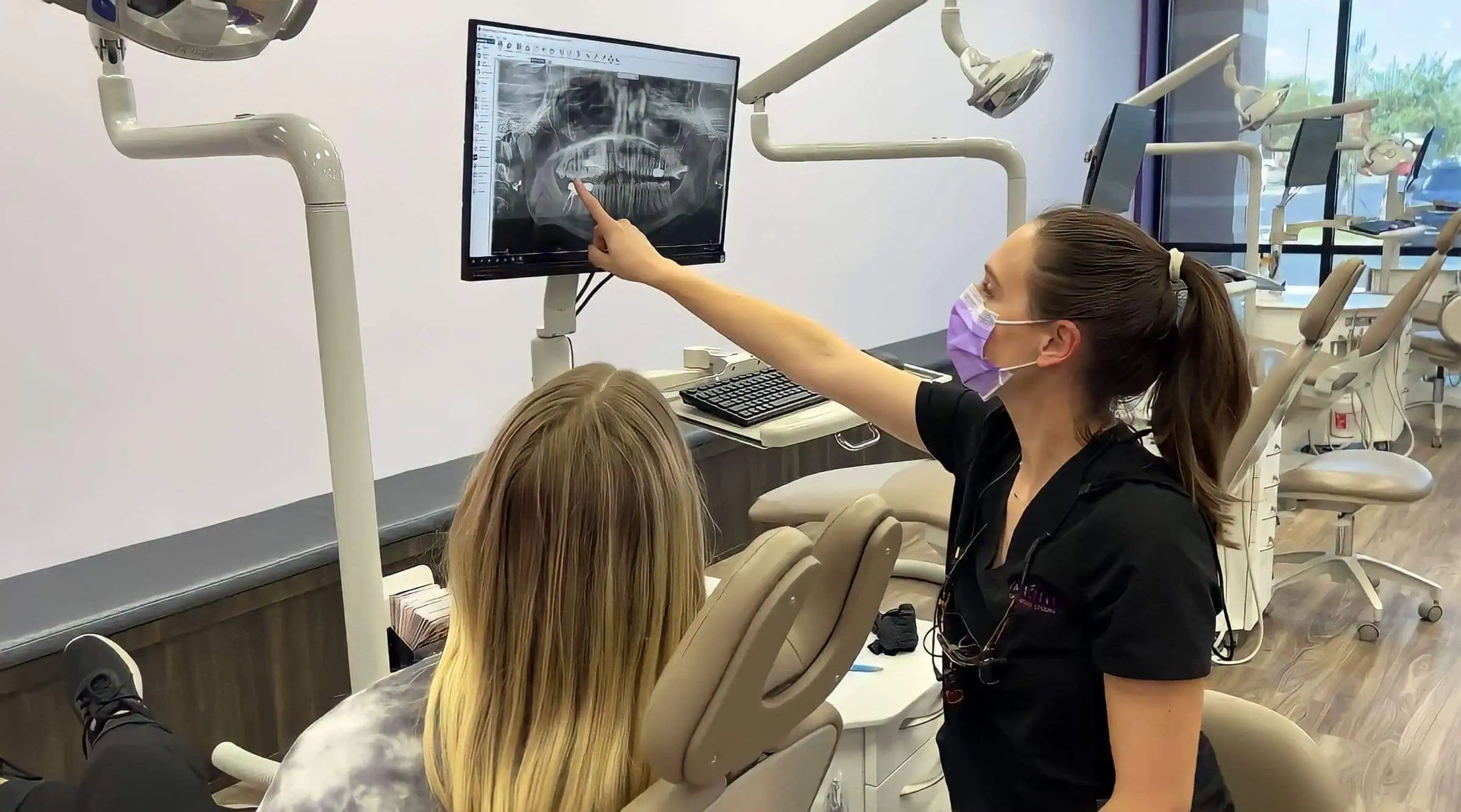
Maybe you’ve noticed your teeth overlapping, twisting, or pushing against each other. You’re not alone. Crowded teeth are one of the most common orthodontic concerns, affecting both kids and adults. The good news? Crowding is highly treatable, and you have more options than ever to get a smile that feels as good as it looks.
Whether you see crowding in your child’s smile or you’re finally ready to address your own, this guide breaks down everything you need to know. We’ll cover what causes crowded teeth, how braces for crowded teeth work, and help you figure out if braces or clear aligners are the right fit for your situation.
What Are Crowded Teeth and Why Do They Happen?
Crowded teeth occur when there isn’t enough room in your jaw for all your teeth to fit properly. This lack of space causes teeth to overlap, rotate, twist, or get pushed forward or backward out of alignment. According to the American Association of Orthodontists (aaoinfo.org), crowding is the most frequently cited reason people seek orthodontic treatment. Think of it like trying to fit too many books on a shelf that’s too small.
Orthodontists classify crowding into three categories:
- Mild crowding: Slight overlapping or rotation of one to three teeth
- Moderate crowding: Several teeth significantly out of position
- Severe crowding: Extensive overlapping with teeth pushed dramatically out of alignment
So why does crowding happen in the first place? A few common culprits:
Genetics play the biggest role. You might inherit a smaller jaw from one parent and larger teeth from another. That mismatch creates a space problem that no amount of brushing or good habits can fix on its own.
Sometimes baby teeth fall out too early, and when that happens, neighboring teeth drift into the empty space. This blocks permanent teeth from coming in where they should, setting the stage for crowding that shows up later.
Did your child use a pacifier past age 3, or struggle to stop thumb-sucking? Those habits can affect jaw development and tooth positioning, sometimes creating crowding that doesn’t become obvious until years down the road.
Here’s what many people don’t realize: crowding tends to get worse over time, not better. Teeth naturally shift throughout your life, and without intervention, mild crowding can become moderate or severe.
Beyond aesthetics, crowded teeth create real health concerns. Overlapping teeth trap food and plaque in hard-to-reach spots, making your daily brushing routine far less effective. This increases your risk of cavities, gum disease, and uneven enamel wear.
Teeth that don’t meet properly also put extra stress on certain areas, which can lead to chips or cracks down the road. In some cases, crowding contributes to chronic bad breath because bacteria builds up in those tight spaces between teeth.
How Orthodontic Treatment Corrects Crowded Teeth
Braces and clear aligners fix crowded teeth by putting gentle, steady pressure on your teeth so they shift into place over time. Teeth aren’t locked rigidly in bone. They’re held by ligaments that allow controlled movement when steady force is applied.
Treatment for crowded teeth typically involves creating the space needed for proper alignment. Depending on your situation, this might include:
- Palatal expansion for children whose jaws are still developing
- Interproximal reduction (IPR) where tiny amounts of enamel are removed between teeth to create room
- Tooth extraction in severe cases where there simply isn’t enough jaw space
With traditional braces, brackets bonded to each tooth connect to an archwire. Your Board-Certified Orthodontist adjusts this wire at regular visits, guiding teeth into alignment over time.
With clear aligners like Angel Aligners, you wear a series of custom-made, removable trays. Each set moves your teeth slightly closer to their final position before you switch to the next tray.
How long does treatment take? That depends on how severe your crowding is:
- Mild crowding: Often 6 to 12 months
- Moderate crowding: Typically 12 to 18 months
- Severe crowding: Usually 18 to 24+ months
After your teeth are straight, the retention phase begins. Wearing retainers keeps your teeth from shifting back to their old positions. This step matters more than most people expect, because teeth have a strong tendency to drift back toward where they started. Consistent retainer wear protects your results for life.
Benefits of Treating Crowded Teeth Early
Straightening crowded teeth does more than improve your appearance. These benefits play out with every family member who goes through treatment.
Better Brushing Starts with Straight Teeth
When teeth line up properly, brushing and flossing actually works. No more struggling to clean those tight, overlapping areas where cavities love to form.
You’ll spend less time fighting with floss and more time knowing your routine is doing its job. Properly aligned teeth are simply easier to keep clean, which means fewer trips to the dentist for problems that crowding creates.
A Straighter Smile Changes How You Show Up
A straight smile makes a real difference in how you feel. Teens getting through school and adults in professional settings both say the same thing: feeling good about your smile changes how you show up in the world. It’s one of those changes that ripples into everything else.
Alignment Takes Stress Off Your Jaw
Crowded teeth often cause an uneven bite. Fixing alignment prevents jaw discomfort, TMJ problems, and the uneven wear that grinds down certain teeth faster than others. Your jaw works best when your teeth meet evenly, and proper alignment takes unnecessary stress off the joint.
Why Early Treatment Matters for Kids
The American Association of Orthodontists (aaoinfo.org) recommends children have their first orthodontic evaluation by age 7. Early intervention through two-phase treatment at Imagine Orthodontic Studio can guide jaw growth and reduce the severity of crowding. This often means simpler, shorter treatment later.
Long-term, aligned teeth cost you less in dental work over a lifetime. You’ll spend less time and money dealing with the cavities, gum issues, and wear patterns that crowding creates.
Braces vs. Clear Aligners: Which Fixes Crowded Teeth Best?
Both braces and clear aligners can effectively treat crowded teeth. The right choice depends on your specific situation, lifestyle, and preferences.
| Factor | Traditional Braces | Clear Aligners (Angel Aligners) |
|---|---|---|
| Best for | Moderate to severe crowding | Mild to moderate crowding |
| Visibility | Metal brackets visible | Nearly invisible |
| Removability | Fixed in place | Removable for eating and cleaning |
| Compliance | Works 24/7 automatically | Requires 20 to 22 hours daily wear |
| Maintenance | Extra care when brushing | Remove to brush normally |
| Adjustments | In-studio every 4 to 8 weeks | Switch trays at home |
| Lifestyle impact | Some food restrictions | Eat whatever you want |
What Makes Traditional Braces the Go-To for Severe Crowding?
Traditional metal braces remain the most reliable option for moderate-to-severe crowding. They work around the clock without relying on you to remember to wear them. Modern braces are smaller, stronger, and less noticeable than ever. You can customize them with colored bands to express your style.
Are Clear Aligners a Good Fit for Crowded Teeth?
Angel Aligners offer a discreet option for mild-to-moderate crowding. They’re removable, so eating and brushing stay simple. Many adults and teens love that aligners are nearly invisible.
Severe crowding, though, often requires the precise control that braces provide. The only way to know which option fits your crowding severity and goals? Schedule a free consult with a Board-Certified Orthodontist who can examine your teeth, take digital scans, and recommend the best approach.
What Affects the Cost of Braces for Crowded Teeth?
The cost of treating crowded teeth depends on a few key factors: how severe the crowding is, which treatment type you choose (braces vs. aligners), whether you need extra steps like extractions or expanders, how long treatment lasts, and the type of retainers you’ll wear afterward.
Crowding severity matters most. Mild crowding requiring shorter treatment costs less than severe cases needing extensive work over two years. Treatment type affects price too, since braces and aligners may differ in cost depending on how complex the movements are.
Some cases also require extractions, palatal expanders, or other appliances before or during treatment, and those add to what you’ll pay. Longer treatment means more visits and adjustments, which factors into total cost. Post-treatment retainers are part of the package and should be factored into your budget from the start.
Imagine Orthodontic Studio accepts most insurances and Medicaid, and offers 0% interest payment plans to fit treatment into your budget. A free consult gives you a personalized cost estimate with no guesswork, so you’ll know exactly what to expect before making any decisions.
How to Know If You Need Braces for Crowded Teeth
Wondering if your crowding is serious enough to treat? A Board-Certified Orthodontist can confirm whether treatment is needed, but here are signs to watch for:
Physical signs you can see:
- Teeth overlapping or stacked on top of each other
- Teeth rotated or twisted at odd angles
- One or more teeth pushed forward or backward out of line
- Difficulty fitting floss between certain teeth
- A tooth that seems “hidden” behind its neighbors
Functional clues you might notice:
- Food constantly getting stuck in the same spots
- Uneven bite where some teeth hit before others
- Jaw discomfort or clicking
- Certain teeth wearing down faster than others
For children: At age 7, enough permanent teeth have come in to spot developing problems. Early detection lets your orthodontist monitor growth and step in at the ideal time if needed.
For adults: It’s never too late to straighten crowded teeth. According to the American Association of Orthodontists, one in three orthodontic patients today is an adult (aaoinfo.org). Today’s options make it easier than ever to fit treatment into your life. Orthodontics is for everyone.
The only reliable way to know exactly what you need? A professional assessment. Digital scans and X-rays reveal what’s happening beneath the surface. Your Board-Certified Orthodontist can see root positions, jaw structure, and predict how teeth will move. This information shapes a customized plan built specifically for you.
Frequently Asked Questions About Crowded Teeth and Braces
Can crowded teeth fix themselves?
No. Crowding typically gets worse over time as natural tooth shifting continues throughout life. The earlier you address it, the simpler treatment tends to be.
How long does it take to fix crowded teeth with braces?
It depends on severity. Mild crowding may take 6 to 12 months, moderate cases typically need 12 to 18 months, and severe crowding can require 18 to 24 months or longer.
Your Board-Certified Orthodontist will give you a personalized timeline during your free consult based on your specific crowding pattern and treatment type.
Can clear aligners fix severely crowded teeth?
In most cases, severe crowding responds better to traditional braces. Angel Aligners work well for mild-to-moderate crowding, but complex rotations and significant tooth movements can exceed what aligners accomplish alone. A free consult determines which option matches your case.
Is it worth fixing mildly crowded teeth?
Yes. Even mild crowding affects your ability to clean teeth properly, increasing cavity and gum disease risk. Mild cases also tend to worsen with age, so treating crowding now prevents bigger problems later and is typically faster and less expensive than waiting.
What happens if you don’t fix crowded teeth?
Untreated crowding leads to trapped plaque, more cavities, and gum disease. Uneven pressure wears down enamel unevenly, leading to chips and cracks. Bite problems can trigger jaw discomfort and TMJ issues. The longer you wait, the more complex and costly treatment becomes, and what starts as a minor cosmetic concern can turn into a real health problem over the years. If you’re unsure where you stand, a free consult at Imagine Orthodontic Studio can give you a clear picture of your options.