
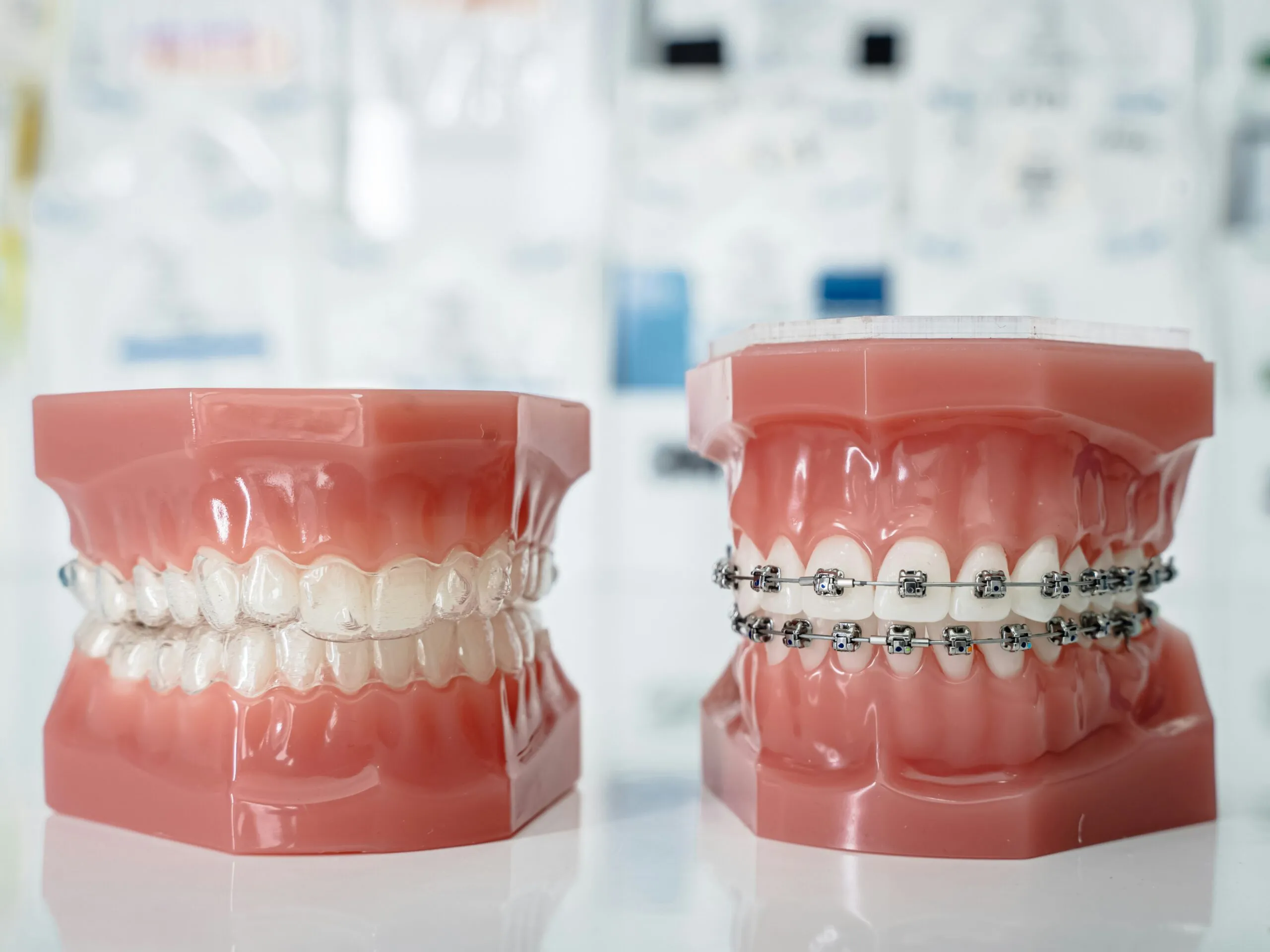
What Are Self-Ligating Braces?
Self-ligating braces are brackets that use a built-in clip or sliding door to hold the archwire in place, eliminating the need for elastic bands or metal ties. Unlike traditional braces that rely on tiny elastic O-rings or thin wire ligatures to secure the archwire, self-ligating brackets contain their own closure system built right into the bracket itself. This design difference affects how your teeth move, how your visits feel, and how you care for your braces throughout treatment.
If you’ve been researching ways to improve your smile, you’ve probably come across this term and wondered: are self-ligating braces actually better than traditional braces? Maybe your orthodontist mentioned them during a consult, or you stumbled upon the phrase while reading up on your options. Either way, you’re here because you want to know what makes them different from the braces you remember seeing on classmates growing up.
The concept is straightforward: the bracket’s built-in door opens, the wire slides in, and the door closes. No elastic bands needed.
That design difference might sound small. It changes quite a bit about your treatment experience, though.
Two main types of self-ligating systems exist: passive and active. Passive self-ligating brackets use a clip that allows the wire to slide more freely, creating less friction during the early stages of treatment when your teeth are doing most of their moving. Active self-ligating brackets press the wire more firmly into the bracket slot, giving your orthodontist greater control during the finishing stages when precise positioning matters most.
Popular self-ligating brands include Damon System, Empower, and In-Ovation. Each has its own design features, but they all share that fundamental clip-based approach.
This technology isn’t brand new, either. Orthodontists have been refining these systems for several decades, improving the bracket designs, materials, and mechanics along the way. What started as a newer concept has become a trusted option that many Board-Certified Orthodontists now offer alongside traditional braces and clear aligners. braces page
So why does any of this matter for your smile? Because the way your braces hold the wire affects everything from comfort to visit length to how easy it is to keep your teeth clean. Let’s break down exactly how these brackets work and whether they might be right for you.
How Do Self-Ligating Braces Work?
Self-ligating braces work by using a small built-in door or clip on each bracket to hold the archwire in place, removing the need for elastic bands or metal ties. Once you understand the mechanics, it’s easy to see why they’ve gained popularity.
During your visit, the door gets opened, the archwire is placed into a slot in the bracket, and then the door closes to secure it. That’s it. No elastic bands to stretch around each bracket. No tiny metal ties to twist into place.
This slide mechanism creates what orthodontists call “reduced friction.” With traditional braces, the elastic or metal ligatures press the wire tightly against the bracket, creating resistance. Your teeth have to work against that friction as they move. Self-ligating brackets let the wire slide more freely through the bracket slot, especially in passive systems.
Traditional braces are like trying to slide something through a tight grip. Passive self-ligating braces work more like guiding something through a loose tunnel. Less resistance means your teeth respond to gentle forces more efficiently.
Here’s how the passive vs. active distinction plays out during treatment:
- Early treatment (passive phase): During initial alignment when your teeth need to make bigger movements, passive self-ligating brackets allow the wire to move freely. This low-friction environment helps teeth shift into better positions with less force.
- Finishing stages (active engagement): As treatment progresses and more precise control over tooth position and root angles is needed, active self-ligating brackets or tighter wire engagement provides the torque required for fine-tuning.
A typical treatment timeline looks something like this: brackets are bonded to your teeth, an initial archwire is placed, and periodic visits are scheduled for wire changes and adjustments. As your teeth move, you’ll graduate to progressively thicker or differently shaped wires that continue guiding your smile into alignment. treatment timeline page
Your orthodontist will walk you through each phase of this process so you always know what to expect. One thing many families appreciate? Visits tend to be shorter. Without elastic ligatures to remove and replace on every single bracket, adjustments happen more quickly. You’re in and out, back to your day.
Benefits of Self-Ligating Braces
So what’s in it for you? Self-ligating braces offer several advantages that make treatment more comfortable and convenient. Here’s what stands out.
Shorter, More Efficient Visits
Without elastic bands to change on every bracket, adjustment visits typically take less time. The clips get opened, wire changes happen, and the clips close again. It’s a quicker process that shaves minutes off each visit. When you’re fitting orthodontic visits into a busy schedule, those minutes add up over the course of treatment. For families juggling school, work, and activities, this efficiency makes a real difference in how treatment fits into daily life.
Easier Oral Hygiene
This one’s a big deal. Traditional elastic ligatures are notorious for trapping food particles and plaque. Those tiny rubber bands create extra nooks and crannies where bacteria love to hide.
Self-ligating brackets have fewer components overall. Fewer places for plaque to accumulate. Cleaner brackets, healthier gums.
Brushing and flossing around braces is already a commitment, so anything that makes it easier to keep your teeth clean during treatment is worth considering. Better oral hygiene during treatment means healthier teeth and gums when your braces come off. That’s not a small thing. braces care page
Does the Reduced Friction Actually Improve Comfort?
The reduced friction in self-ligating systems translates to less pressure on your teeth during movement. Many families report that the initial soreness after adjustments feels more manageable compared to traditional braces. Everyone’s experience varies. But the lower friction environment does make a noticeable difference for most people, especially during those first few days after a wire change when soreness tends to peak.
Fewer Overall Visits
Research suggests that people using self-ligating braces often need fewer total adjustment visits over the course of treatment. The efficient wire-to-bracket interaction allows teeth to continue moving between visits without as much intervention. The right schedule depends on your specific case, and your orthodontist will map that out during your free consult. For people who travel frequently or live farther from their orthodontist, fewer required visits can be a major advantage worth factoring into the decision.
What About Aesthetics?
Self-ligating technology isn’t limited to metal brackets. Ceramic (clear) self-ligating brackets offer a more subtle appearance while still providing the mechanical benefits. If how your braces look matters to you but you want the advantages of self-ligation, clear options exist and work well. They blend with your natural tooth color, making them far less noticeable in photos and everyday conversation. clear braces page
Smoother Early Alignment
In many cases, the low-friction design helps teeth begin moving into alignment more efficiently during the early stages of treatment. This doesn’t mean dramatically faster overall treatment, but it often means smoother progress during those first months when crowding and spacing issues are being addressed. Many orthodontists see this play out regularly with the families they treat, noting that initial wire changes often show encouraging movement early on.
How Do Self-Ligating Braces Compare to Traditional Braces?
Let’s put these two options next to each other so you can see exactly where they differ and where they overlap.
| Feature | Self-Ligating Braces | Traditional Braces |
|---|---|---|
| Wire Attachment | Built-in clip or sliding door | Elastic O-rings or metal ligature ties |
| Friction Level | Lower friction, especially in passive systems | Higher friction from ligature pressure |
| Visit Length | Often shorter (no ligature changes) | Longer (ligatures removed and replaced) |
| Oral Hygiene | Easier, fewer plaque-trapping components | More challenging, elastics trap food and bacteria |
| Aesthetic Options | Metal or ceramic available | Metal or ceramic available |
| Customization | Standard bracket colors | Colorful elastic options for personalization |
| Cost | Typically slightly higher | Generally lower initial cost |
How Does the Bracket Design Differ?
Traditional brackets are passive receptacles. They hold the wire, but they need an elastic band or metal tie to keep that wire in place. Self-ligating brackets are self-contained systems. The closure mechanism is part of the bracket itself, which eliminates the need for any external ligature. This built-in design is the core difference that drives every other advantage and tradeoff between the two systems.
How Does Friction Affect Tooth Movement?
Orthodontic research has shown that the mechanics of how force is applied to teeth matters for treatment efficiency. Lower friction means teeth respond to lighter forces. Traditional braces work beautifully, but the ligatures do create resistance that the orthodontic system has to work against.
A Board-Certified Orthodontist understands how to maximize results with either system, adjusting force levels and wire sequences based on what your teeth need at each stage. The bracket is a tool. How it’s used is what separates good results from great ones.
What’s the Visit Experience Like?
With traditional braces, every adjustment visit involves removing each elastic ligature, making wire changes, and placing new ligatures on every bracket. It’s meticulous work. Self-ligating brackets simplify this: open the clips, adjust the wire, close the clips. The time savings per visit are real, and they compound over 12 to 24 months of treatment. metal braces page
How Does Each System Affect Daily Cleaning?
Here’s where many people notice the biggest day-to-day difference. Elastic ligatures discolor over time, especially if you love coffee, tea, or tomato sauce. They also collect plaque and food debris between brushings. Self-ligating brackets eliminate this issue entirely, making your brushing and flossing routine more straightforward. oral hygiene with braces page
Is Treatment Actually Faster with Self-Ligating Braces?
Here’s an honest answer: research comparing self-ligating and traditional braces shows similar overall treatment times in many cases. The bracket type matters, but it’s not the only factor determining how long you’ll wear braces.
What matters more? The skill and experience of your orthodontist. A Board-Certified Orthodontist knows how to get excellent results with either system. The bracket is a tool, and how it’s used makes the difference.
When Might Traditional Braces Be Preferred?
If you’re a teen (or a teen at heart) who loves expressing yourself through colorful elastics, traditional braces offer that opportunity. Self-ligating brackets don’t use those colored bands, so you lose that customization option. For some families, that’s a dealbreaker. For others, it’s a non-issue.
Both systems produce excellent results in the hands of a skilled orthodontic specialist. The “better” option depends entirely on your priorities.
How Much Do Self-Ligating Braces Cost?
Self-ligating braces often fall in the range of $3,000 to $7,000, though the exact price depends on case complexity, treatment length, geographic location, and bracket material. This tends to be slightly higher than traditional metal braces because the bracket technology is more sophisticated.
What Affects Your Cost?
Case complexity: More severe crowding, spacing, or bite issues require more time and expertise to correct. Complex cases cost more regardless of bracket type.
Treatment length: Longer treatments mean more visits, more materials, and more of your orthodontist’s time. A case that wraps up in 12 months will cost less than one that takes 24 months.
Geographic location: Orthodontic fees vary by region. Urban areas with higher costs of living typically have higher treatment fees. Pricing in Central Florida, for example, may differ from what you’d see in other parts of the state or country.
Bracket material: Ceramic self-ligating brackets cost more than metal versions. The clear material is pricier to manufacture and requires more careful handling during bonding.
The studio you choose: Different orthodontic studios have different fee structures based on their expertise, technology, and overhead costs.
Does Insurance Cover Self-Ligating Braces?
Good news. Most dental insurance plans that cover orthodontic treatment apply the same benefits to self-ligating braces as they do to traditional braces. Your coverage depends on your specific plan, not the bracket type.
If you have orthodontic benefits, they’ll typically cover a portion of treatment up to a set lifetime maximum that varies by plan. The remaining balance is your responsibility. Call your insurance provider to confirm your specific benefit amount before starting treatment.
Studios like Imagine Orthodontic Studio accept most insurances and can help you understand your benefits before you commit to anything.
How Can You Make Treatment More Affordable?
Many orthodontic studios offer 0% interest payment plans that let you spread the cost over time without paying extra. This makes treatment accessible for more families, regardless of budget.
The best way to know exactly what your treatment will cost? Schedule a free consult. During your visit, the orthodontist will evaluate your smile, discuss your options, and provide an estimate based on your specific needs. No surprises.
Who Is a Good Candidate for Self-Ligating Braces?
Self-ligating braces work well for many people, but they’re not automatically the best choice for everyone. Here’s how to figure out if they might be right for you.
Who Are the Best Candidates for Self-Ligating Braces?
Teens and adults with mild to severe alignment issues: Self-ligating systems handle everything from minor crowding to more complex bite problems. The technology is versatile enough to address most orthodontic concerns.
Busy people who value efficient visits: If your schedule is packed and you want to minimize time in the orthodontist’s chair, shorter adjustment visits are a real advantage.
Families concerned about oral hygiene also tend to gravitate toward self-ligating brackets. If keeping teeth clean during treatment feels daunting, or if you’ve struggled with this in the past, the easier-to-clean design removes one major source of stress. Fewer components on the bracket means fewer spots for plaque to hide.
Anyone looking for a more comfortable experience will appreciate the reduced friction, which often means less soreness after adjustments. And if aesthetics matter to you, ceramic self-ligating brackets offer the mechanical benefits in a less noticeable package. Angel Aligners page
When Might Traditional Braces Be a Better Choice?
Some complex tooth movements benefit from the precise control that traditional ligature ties provide. Your orthodontist will know if this applies to your specific case.
Teens who love expressing their personality through rainbow-colored elastics will find that traditional braces deliver that experience in a way self-ligating brackets simply can’t. It’s a small thing, but for some families, it matters.
When cost is the primary concern and you’re comparing metal to metal, traditional braces typically come in at a lower price point. Both systems produce excellent results in the hands of a skilled orthodontic specialist.
How Do You Know Which System Is Right for You?
An orthodontist evaluates your bite, crowding, spacing, and smile goals to recommend the right system for you. During a free consult, they’ll examine your teeth, take records, and discuss which options make the most sense for your specific situation.
The bracket type is just one piece of the puzzle. What matters most is finding an orthodontic specialist who listens to your goals and creates a treatment plan tailored to achieve them. That’s the kind of care that makes the difference between good results and results that are even better than you imagined.
Frequently Asked Questions About Self-Ligating Braces
Do self-ligating braces hurt less than traditional braces?
Generally, yes. The reduced friction in the bracket system means lighter forces move your teeth, which translates to less soreness after adjustments. That said, some discomfort is normal with any type of braces, especially in the first few days after getting them and following wire changes.
How long does treatment take with self-ligating braces?
Most people wear self-ligating braces for 12 to 24 months, which is similar to traditional braces. The exact timeline varies based on the complexity of your alignment issues. Your orthodontist will give you a realistic timeline during your free consult.
Can you get ceramic (clear) self-ligating brackets?
Yes, and they’re popular for good reason. Ceramic self-ligating brackets blend with your natural tooth color while still providing the mechanical advantages of the self-ligating design. They’re a great middle ground between metal braces and clear aligners for people who want effective treatment with a subtle appearance.
Do self-ligating braces work faster than regular braces?
The honest answer: not by a dramatic margin. While some studies suggest self-ligating braces speed up certain phases of treatment, particularly initial alignment, overall treatment times tend to be comparable to traditional braces. The efficiency gains show up more in visit length and comfort than in total treatment duration. Your orthodontist’s expertise matters more than the bracket type when it comes to achieving results efficiently.
Are self-ligating braces worth the extra cost?
For many families, the answer is yes. Shorter visits, easier cleaning, and more comfortable adjustments add real value to the treatment experience. If your schedule is busy, if oral hygiene is a concern, or if you want a more streamlined experience, the slightly higher cost often makes sense. Traditional braces are excellent too. The best choice depends on your priorities, your budget, and what your orthodontist recommends for your specific case.
Can adults get self-ligating braces?
Age isn’t a barrier to orthodontic treatment, and healthy teeth can be moved at any age. Self-ligating braces work great for adults. Many adults appreciate the shorter visit times and easier maintenance. Whether you’re aligning your teeth for the first time or addressing issues that have developed over the years, self-ligating braces are a solid option. Orthodontics is for everyone, regardless of age or stage of life.
What Should You Expect at Your First Self-Ligating Braces Visit?
Getting self-ligating braces placed usually takes about 60 to 90 minutes. The brackets are bonded to your teeth with a special adhesive, and then the archwire is threaded through and secured with the built-in clips. Most people describe the bonding process as painless.
You’ll feel some pressure as your teeth begin adjusting to the wire over the next few days, but over-the-counter pain relief and soft foods make that transition manageable. Your orthodontist will send you home with care instructions and schedule your next visit, typically four to eight weeks later.
If you’re curious whether self-ligating braces, traditional braces, or Angel Aligners are the best fit for your smile goals, a free consult is the easiest way to find out.