
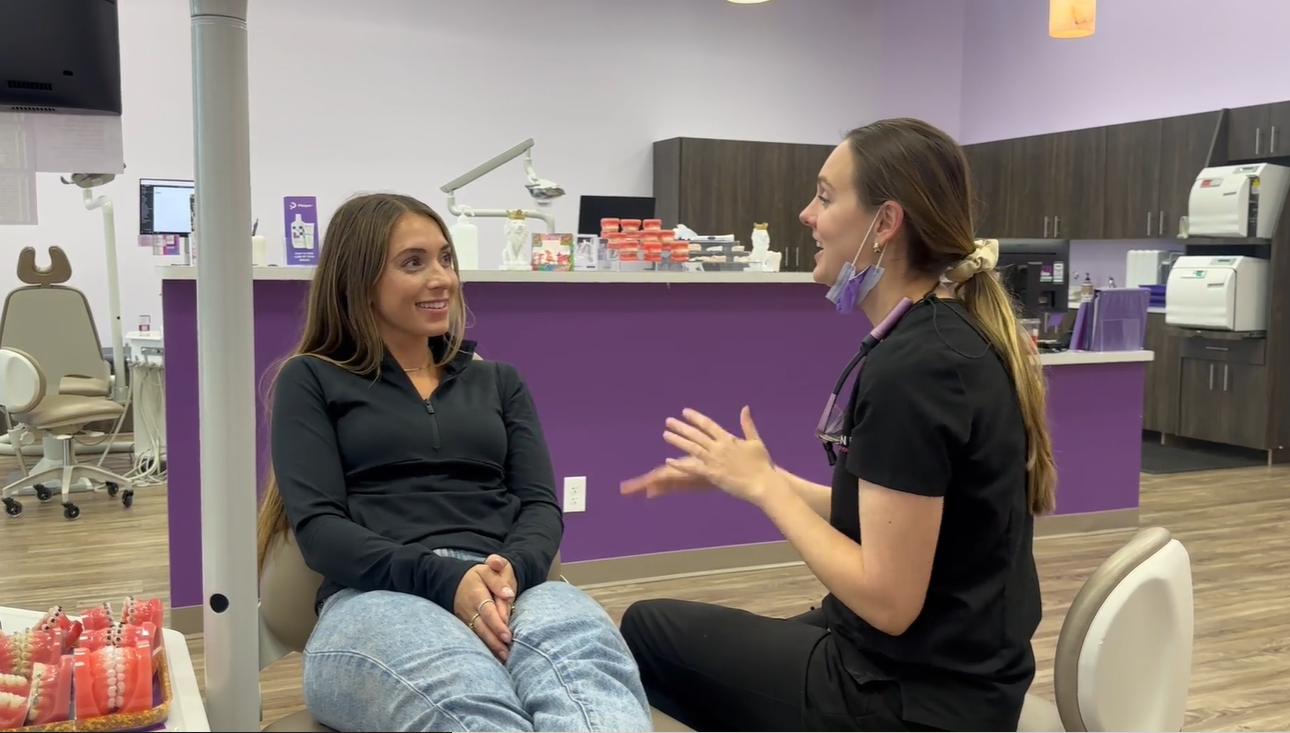
If your heart races at the thought of sitting in an orthodontist’s chair, you’re not alone. That knot in your stomach before a scheduled session? Completely normal. Millions of people experience dental anxiety, and orthodontic sessions can trigger it in unique ways.
The good news? Learning how to manage dental anxiety before your orthodontic visit can completely shift your entire experience. With the right strategies, your next trip to the orthodontist can feel manageable, maybe even comfortable. Let’s look at what causes dental anxiety and, more importantly, what you can do about it.
What Is Dental Anxiety, and Why Does It Spike Before Orthodontic Visits?
Dental anxiety is the uneasy, nervous feeling you get when thinking about or preparing for dental care. It ranges from mild nervousness to intense dread that may cause people to avoid care entirely. Dental phobia takes things further, representing a more severe, persistent fear that keeps people away from dental care even when they’re hurting. Both conditions are common, and orthodontic settings can intensify them due to the ongoing nature of treatment.
Research from the American Dental Association suggests that a significant portion of Americans avoid going to the dentist because of anxiety or fear. Roughly one in three adults experiences some level of dental anxiety. These aren’t small numbers. This is a widespread experience that affects people of all ages and backgrounds.
So why do orthodontic sessions sometimes feel extra nerve-wracking?
Orthodontic sessions have unique triggers. Unlike a routine cleaning that’s over in thirty minutes, orthodontic treatment spans months or years. Each adjustment reminds you of the ongoing commitment. Wires being changed, brackets being tightened, unfamiliar tools in your mouth, all of these can activate anxiety responses. Board-Certified Orthodontists work with anxious visitors every single day. They get it, and they genuinely want to help.
Common anxiety triggers include:
- Sounds: The clicking of instruments, the whir of equipment
- Loss of control: Lying back with your mouth open while someone works on your teeth
- Past negative experiences: A rough encounter, a dismissive provider, or childhood trauma
- Fear of the unknown: Not knowing what to expect during adjustments
- Anticipation of discomfort: Worrying about soreness after tightening
Orthodontic-specific concerns add another layer. Worries about how braces will look are common. The length of treatment can add stress. And then there’s the anxiety around dietary restrictions or the responsibility of caring for your appliances. These worries pile on top of general dental anxiety, making the whole experience feel heavier than it needs to.
Here’s what matters most: your anxiety is valid, and it’s manageable. Effective strategies exist to help you feel calmer and more in control. Orthodontic teams won’t judge you. They see this every day and they’re ready to support you through it.
Let’s look at the techniques that actually work.
Pillar page on orthodontic treatment overview
How Dental Anxiety Management Works: Proven Techniques You Can Use Today
Managing dental anxiety isn’t about forcing yourself to “just relax.” It’s about using specific, evidence-based techniques that give your nervous system concrete tools to calm down. Here’s a step-by-step approach you can start using right away.
How Does Communicating With Your Orthodontist Reduce Anxiety?
This might be the most powerful anxiety-reducer available to you. And it costs nothing.
Before your session, tell your orthodontic team that you experience anxiety. Be direct. You might say, “I get really nervous at dental sessions, and I wanted to let you know.” Most teams appreciate this honesty because it helps them help you.
Ask questions ahead of time. Not knowing what’s coming often makes anxiety worse. Ask your orthodontist to explain what will happen during your session. How long will it take? Will there be any discomfort? What sounds might you hear?
Establish a stop signal. Agree on a hand signal (like raising your hand) that means “I need a break.” Knowing you can pause at any moment gives you back a sense of control. That sense of control directly reduces anxiety.
Request explanations during the session. Some people feel calmer when the orthodontist narrates what’s happening. “Now I’m going to change your wire. You might feel some pressure.” Others prefer quiet. Tell your team which you prefer.
How Does the 4-7-8 Deep Breathing Method Calm Your Nerves?
Your breath is directly connected to your nervous system. When you’re anxious, your breathing becomes shallow and fast. This signals danger to your brain, which increases anxiety. Deep breathing breaks this cycle.
The 4-7-8 technique is simple and effective:
- Inhale quietly through your nose for 4 seconds
- Hold your breath for 7 seconds
- Exhale completely through your mouth for 8 seconds
Practice this at home first. Use it in the car before you walk into the studio, in the waiting room, and in the chair before the orthodontist begins.
The extended exhale activates your parasympathetic nervous system, the “rest and digest” response that counteracts anxiety. Even three or four cycles can make a noticeable difference.
How Do Progressive Muscle Relaxation and Grounding Exercises Help?
When anxiety hits, your muscles tense up. You might clench your jaw, grip the armrests, or curl your toes without realizing it. Progressive muscle relaxation reverses this physical response.
In the chair, try this:
- Start with your feet. Tense the muscles for 5 seconds, then release.
- Move to your calves. Tense, then release.
- Work your way up: thighs, stomach, hands, arms, shoulders.
- Notice the contrast between tension and relaxation.
Grounding exercises pull your attention away from anxious thoughts and into the present moment. Try the 5-4-3-2-1 technique:
- Name 5 things you can see
- Name 4 things you can touch
- Name 3 things you can hear
- Name 2 things you can smell
- Name 1 thing you can taste
This simple exercise interrupts the anxiety spiral by giving your brain something concrete to focus on.
What Distraction and Pre-Session Tools Can You Use?
Distraction works. It’s not avoidance. It’s a legitimate coping strategy that gives your brain something else to process besides anxious thoughts.
Music, audiobooks, and podcasts are excellent options. Most orthodontic studios welcome people wearing earbuds. Create a playlist specifically for your sessions. Choose calming music or an engaging podcast that holds your attention. A stress ball, fidget toy, weighted blanket, or sunglasses to block bright overhead light can also help. Ask your orthodontic team what they allow, because many studios actively encourage these tools.
What you do in the hours before matters, too. Arrive early so you can settle in and practice breathing exercises. Skip caffeine on session days since coffee and energy drinks amplify anxiety symptoms like racing heart and jitteriness. Eat a light meal so you’re not hungry but not uncomfortably full. Spend a few minutes visualizing the session going smoothly, picturing yourself calm in the chair and leaving the studio feeling proud. Wear comfortable clothes in soft fabrics, and avoid anything tight around your neck.
These techniques work best when combined. Use breathing exercises while listening to music. Communicate with your team while practicing grounding. Layer the strategies that resonate with you.
Braces treatment page
Benefits of Managing Dental Anxiety Before Your Orthodontic Visit
When you actively manage your anxiety, the benefits go far beyond just “getting through” the session. Here’s what changes when you take control.
Better Treatment Outcomes Start With a Calm Body
Relaxed visitors cooperate more easily during treatment. When your body isn’t tense and fighting against the process, your orthodontist can work more efficiently and effectively. Your muscles aren’t clenched. Your jaw isn’t tight.
Board-Certified Orthodontists can make more precise adjustments when you’re calm. They can take their time without worrying about increasing your distress. This cooperation can actually affect your treatment results in a meaningful way.
Why Do Sessions Feel Shorter When You’re Calm?
Time moves differently when you’re anxious. Minutes feel like hours. Every second stretches.
But when you’re calm, sessions feel shorter. You might be surprised to check the clock and realize thirty minutes passed while you listened to your podcast. The actual session length doesn’t change, but your experience of it does.
Less Anxiety Means Less Physical Discomfort
Anxiety amplifies how you perceive sensations. When you’re tense and fearful, your brain interprets sensations as more threatening than they actually are. That slight pressure during a wire change? Anxiety can make it feel much more intense.
Managing your anxiety before and during sessions means you’ll likely experience less discomfort. The treatment doesn’t change. Your perception of it does. That’s one of the most practical reasons to invest time in these techniques.
Consistent Care Protects Your Long-Term Oral Health
Here’s a benefit worth paying attention to: when sessions aren’t dreaded ordeals, you actually keep them. Many people with dental anxiety cancel or postpone. They skip adjustments. They delay necessary care.
This avoidance creates bigger problems down the road, including longer treatment times, complications, and poorer outcomes. When you manage your anxiety effectively, you maintain consistent care. Your treatment stays on track. Building a real relationship with your orthodontic team makes returning feel less like a chore and more like checking in with people who genuinely care about your smile.
Each Successful Session Builds Real Confidence
Perhaps the most meaningful benefit is psychological. Each successful session builds confidence. You prove to yourself that you can handle this. That proof accumulates over time.
What once felt impossible becomes manageable. What felt manageable becomes routine. This sense of mastery extends beyond the orthodontist’s chair. It shows you that you can face difficult situations and come out okay.
Effective anxiety management techniques can also reduce or eliminate the need for sedation in many cases. They cut the cycle of rescheduling, too, that exhausting pattern of booking, dreading, canceling, and rebooking. Breaking that cycle removes a real source of stress from your life.
Angel Aligners clear aligner treatment page
Comparing Anxiety Management Methods: Which Strategy Works Best for You?
Not every technique works equally well for everyone. Your ideal approach depends on your anxiety level, your preferences, and what feels natural to you.
Breathing, Distraction, and Cognitive Behavioral Strategies
Breathing techniques work directly on your nervous system. They’re free, always available, and backed by solid research. They do require practice to become effective, though, and some people find it hard to focus on breathing when anxiety peaks.
Distraction methods like music, podcasts, and fidget tools redirect your attention away from anxiety triggers. They’re easy to use right away without practice. For some people, though, distraction alone isn’t enough when anxiety is severe, because it works around the underlying fear rather than addressing it.
Cognitive behavioral strategies take a different angle. They involve changing your thoughts about dental sessions. You might challenge catastrophic thinking (“This will be terrible”) with more balanced thoughts (“I’ve gotten through sessions before”). These strategies are powerful but typically require working with a therapist to learn properly.
In-Studio Amenities vs. At-Home Preparation
Many orthodontic studios offer weighted blankets, noise-canceling headphones, ceiling-mounted TVs, aromatherapy, and other comfort items. These are convenient since the studio provides them, but you can’t always control what’s available. Not every studio offers the same amenities.
At-home preparation puts you in control. Pre-session routines, breathing practice, visualization, and bringing your own comfort items all fall into this category. The downside is that it requires planning and effort on your part. The best approach? Combine both. Prepare at home AND take advantage of in-studio comforts.
Self-Guided Techniques vs. Professional Support
For mild to moderate anxiety, self-guided techniques are often enough. Breathing exercises, distraction, visualization, and communication strategies are all free and accessible.
Professional support, including therapy (especially cognitive behavioral therapy), guided meditation apps, and conversations with your primary care doctor, costs money and time but provides expert guidance. For moderate to severe anxiety or true dental phobia, professional help may be necessary.
How These Techniques Stack Up Side by Side
The table below offers a general comparison based on published research on cognitive behavioral therapy and relaxation techniques, along with broad practitioner consensus. Individual results will vary.
| Technique | Effort Level | General Effectiveness (1-5) | Best Suited For |
|---|---|---|---|
| 4-7-8 Breathing | Low (after practice) | ★★★★ | Mild to moderate anxiety |
| Progressive Muscle Relaxation | Medium | ★★★★ | Physical tension, moderate anxiety |
| Distraction (music/podcasts) | Low | ★★★ to ★★★★ | Mild anxiety, long sessions |
| Communication with team | Low | ★★★★★ | All anxiety levels |
| Grounding exercises | Low | ★★★ | Acute anxiety spikes |
| Visualization | Medium | ★★★ to ★★★★ | Anticipatory anxiety |
| Cognitive behavioral therapy | High (requires therapist) | ★★★★★ | Moderate to severe anxiety |
| Meditation apps | Medium | ★★★ to ★★★★ | Daily anxiety management |
Ratings reflect general trends in published literature and practitioner experience. Your results may differ.
What Does Professional Anxiety Support Cost?
Most dental anxiety management techniques are free. When professional support is needed, costs range widely: self-guided techniques cost nothing, meditation apps run about $10 to $15 per month, therapy sessions typically fall between a hundred and a few hundred dollars per session, and sedation options range from roughly $25 for nitrous oxide up to several hundred dollars for oral sedation. Costs vary by location and insurance coverage.
Which Free Strategies Actually Work?
Breathing techniques, progressive muscle relaxation, grounding exercises, and communication with your orthodontic team are all completely free. You can start using them today. No special equipment, no extra sessions, no ongoing costs.
Distraction tools have minimal cost. You likely already own earbuds and a smartphone with music or podcasts. A stress ball costs a few dollars. Pre-session routines cost nothing but time.
When Does Professional Support Make Sense?
For some people, self-guided techniques aren’t enough. If your anxiety is severe or has crossed into phobia territory, professional support can help.
Therapy for dental anxiety can range from around a hundred dollars to a few hundred per session without insurance, though costs vary by provider and region. Many insurance plans cover mental health services, and cognitive behavioral therapy for dental phobia often shows results within several sessions.
Guided meditation apps frequently offer free versions with limited content, while premium subscriptions typically cost around $10 to $15 per month. Some include specific dental anxiety programs.
Sedation options vary. Nitrous oxide (laughing gas) is generally one of the more affordable choices per session, while oral sedation typically costs more. Insurance coverage varies widely, so check with your plan. Ask your orthodontic team to walk you through what’s covered and what to expect.
The bottom line? Start with free techniques. They work for most people. If you need more support, options exist at various price points.
Schedule a free consult to talk through your options.
Who Struggles Most with Dental Anxiety, and When to Seek Extra Help
Dental anxiety doesn’t discriminate, but certain groups tend to experience it more intensely. Board-Certified Orthodontists see these patterns regularly and can tailor the experience accordingly. Understanding who’s most affected can help you recognize when extra support might be needed.
Children, Teens, and First-Time Visitors
First-time orthodontic visitors often experience significant anxiety because everything is new and unfamiliar. Children starting two-phase treatment may worry about wearing appliances for the first time, looking different from their peers, or the length of treatment. Teens getting braces often stress about their appearance, social reactions from friends, dietary restrictions, and how braces will affect sports and activities.
For young visitors, parental support matters enormously. Parents can model calm behavior, validate feelings without amplifying them, and help establish pre-session routines. Practicing coping techniques together at home, like breathing and visualization, gives kids tools they can actually use in the chair.
Two-phase treatment page
Adults With Past Negative Experiences or Sensory Sensitivities
Adults who had negative dental experiences in childhood often carry that anxiety into adulthood. A rough encounter, a dismissive provider, or feeling forced into treatment can create lasting fear. These adults may avoid dental care for years. When they finally seek orthodontic treatment, the accumulated anxiety can feel overwhelming.
Signs of trauma-related dental anxiety include panic attacks when thinking about sessions, extreme avoidance behavior, and physical symptoms like nausea, sweating, or trembling in dental settings.
People with sensory sensitivities face additional challenges. Bright overhead lights, unfamiliar tastes, equipment sounds, and the texture of gloves can all feel overwhelming. Strong gag reflexes add another layer of difficulty during impressions. For sensory-sensitive visitors, communication with the orthodontic team is especially important, since many accommodations are possible.
When Has Anxiety Crossed Into Phobia?
There’s a point where anxiety becomes something more. Recognizing this line helps you know when to seek professional help.
Signs your anxiety may be dental phobia:
- You avoid all dental care despite discomfort or visible problems
- The thought of a session causes panic attacks
- You’ve missed multiple sessions due to anxiety
- Self-help techniques provide no relief
- You experience intense physical symptoms (vomiting, fainting, difficulty breathing)
If these signs apply to you, self-guided techniques alone probably won’t be enough. Consider talking with a therapist who specializes in phobias, speaking with your primary care doctor, or seeking a studio that specializes in anxious visitors.
Whatever your anxiety level, speak with your orthodontic team. Board-Certified Orthodontists and their staff work with anxious visitors regularly. They’ve seen it all, and they’re equipped to make adjustments like scheduling longer sessions for breaks, explaining every step before it happens, using gentler techniques, providing comfort items, and allowing support people in the room.
You don’t have to white-knuckle your way through treatment. Help is available.
Frequently Asked Questions About Dental Anxiety and Orthodontic Sessions
Is it normal to feel anxious before getting braces?
Absolutely. Feeling anxious before getting braces is extremely common. Research suggests that roughly one in three adults experiences some level of dental anxiety. For first-time orthodontic visitors, anxiety is even more understandable since you’re facing something unfamiliar that will affect your daily life for months or years. Your feelings are valid.
What is the 4-7-8 breathing technique for dental anxiety?
The 4-7-8 breathing technique calms your nervous system quickly. Inhale quietly through your nose for 4 seconds, hold your breath for 7 seconds, then exhale completely through your mouth for 8 seconds. The extended exhale activates your body’s relaxation response. Practice at home first, then use it before and during your orthodontic sessions.
Can I listen to music during my orthodontic session?
Most orthodontic studios welcome people wearing earbuds during sessions. Music, podcasts, or audiobooks provide effective distraction from anxiety triggers. Ask your orthodontic team about their policy beforehand, and create a playlist with content you find calming or engaging enough to hold your attention.
How do I tell my orthodontist I’m anxious?
Be direct and simple. You might say, “I experience anxiety at dental sessions, and I wanted to let you know.” Then ask about accommodations: “Can we establish a hand signal if I need a break?” or “Would you mind explaining each step before you do it?” Orthodontic teams appreciate knowing about your anxiety because it helps them provide better care.
Does dental anxiety get better over time with regular sessions?
Yes, for most people, dental anxiety decreases with regular, positive experiences. Therapists call this gradual exposure, where your brain learns that sessions are survivable, even manageable. Each successful session builds evidence that counters your anxious predictions. The key is consistency, keeping sessions rather than avoiding them.
What should I do if I feel a panic attack coming on during my session?
Use your stop signal to pause the session, then focus on slow, deep breaths with extended exhales. Ground yourself using the 5-4-3-2-1 technique (name things you can see, touch, hear, smell, taste). Remind yourself that you’re safe and that the feeling will pass. Let your orthodontic team know what’s happening so they can give you time and space.
Are there medications that help with dental anxiety?
Some people benefit from anti-anxiety medications taken before sessions. These require a prescription from your doctor. Options include short-acting anti-anxiety medications or sedation provided by the dental team (nitrous oxide or oral sedation). Discuss these options with your primary care doctor and your orthodontist if self-guided techniques aren’t providing enough relief.
How can I help my child with dental anxiety before their orthodontic session?
Model calm behavior, since children pick up on parental anxiety. Explain what will happen in simple, honest terms, and practice coping techniques together at home like breathing and visualization. Bring a comfort item to the session and validate their feelings without amplifying them: “It’s okay to feel nervous. I know you can handle this.” A pre-treatment studio tour just to meet the team and see the environment can also make a big difference.
Dental anxiety is common, but it doesn’t have to control your orthodontic experience. The techniques in this guide, from communication and breathing exercises to distraction, grounding, and pre-session routines, give you real tools to feel calmer and more in control.
Start with one or two strategies that resonate with you. Practice them before your next session. Notice what helps. Build from there.
Your orthodontic team is on your side. They want your sessions to feel manageable. Speak up about your anxiety and ask for accommodations. Look for a smile studio where the team takes time to know you, where Board-Certified Orthodontists understand that feeling comfortable matters as much as the treatment itself, and where every visitor is treated with genuine care and respect.
Your smile goals are worth pursuing, and your anxiety doesn’t have to stand in the way.